SEO crawlers · Updated August 2026
Screaming Frog vs LibreCrawl vs Deepcrawl Which SEO crawler fits the sites you audit in 2026?
A side-by-side look at Screaming Frog, LibreCrawl and Deepcrawl, built only from what each tool publishes on its own site. Pricing, crawl limits and feature availability are quoted as documented — where a tool does not state something, we say so rather than guess.
 Screaming Frog
  LibreCrawl
  Deepcrawl
 The quick verdict
Three crawlers, three different jobs.
Every tool here fetches pages and reports on what it finds. What separates them is how much you pay per seat, how big a site each can finish, whether anyone else on your team can see the data, and whether you own the code.
Screaming Frog Industry standard
Screaming Frog is the desktop default: 300+ issue checks, the deepest configuration options here, and a free tier that crawls 500 URLs with no sign-up.
- Checks for over 300 SEO issues, warnings and opportunities
- Free tier crawls 500 URLs with no sign-up or email capture
- Custom extraction with XPath, CSS Path, regex and custom JavaScript
- Its site names Apple, Google, Disney, Amazon and NASA as users
LibreCrawl Free and open source
LibreCrawl is a free MIT-licensed crawler you host yourself, with unlimited URLs, Playwright rendering and a documented REST API.
- Free with no paid tier at all, under an MIT licence
- Unlimited URLs, with 1M+ crawls documented as stable
- Self-hosted, so crawl data never leaves your infrastructure
- A documented REST API and a drop-in JavaScript plugin system
Deepcrawl Agent toolkit
Deepcrawl is not an SEO auditing tool. It is a free, open-source extraction API that turns pages into clean markdown and link trees for AI agents.
- Built for agents: cleaned markdown, links tree and page metadata
- 100% free, no pricing, fully open source, and self-hostable
- Typed JavaScript/TypeScript SDK plus REST and RPC endpoints
- Its own docs warn it is early-stage and APIs may change
At a glance
The scoreboard
Highlighted cells mark the stronger option on that metric. No highlight means the values are not directly comparable, or it is a tie.
Feature matrix
The full comparison
Every row reflects what Screaming Frog, LibreCrawl and Deepcrawl document on their own websites, checked on 16 August 2026. "Not stated" means the tool does not publish the detail — not that the feature is definitely missing.
| Feature |
Screaming Frog
|
LibreCrawl
|
Deepcrawl
|
|---|---|---|---|
| Pricing & licensing | |||
| Free version | Partial. 500 URL crawl limit | Supported. Entire tool is free | Supported. 100% free, no pricing |
| Entry paid price | $279/yr (£199) | No paid tier | No paid tier |
| What one licence covers | 1 user, per year | Unlimited users, self-hosted | Unlimited, self-hosted |
| Volume discount | Supported. Down to £169 at 20+ licences | Not available. Not applicable | Not available. Not applicable |
| Money-back or trial terms | Partial. Free version, no refund policy stated | Not applicable | Not applicable |
| Crawl credits | Supported. None | Supported. None | Supported. None |
| Open source licence | Not available. Proprietary | Supported. MIT | Supported. Open source, open code |
| Crawling & scale | |||
| Documented URL ceiling | Unlimited, bounded by hardware | Unlimited, 1M+ stable | Not stated |
| JavaScript rendering | Supported. Chromium WRS, paid only | Supported. Playwright, headless or headed | Not available. Listed as coming soon |
| Cloud crawling | Not available. Desktop only | Partial. Self-host it anywhere | Partial. Self-host on Cloudflare Workers |
| Runs without tying up your machine | Not available. Runs locally | Partial. If you host it elsewhere | Supported. Edge workers |
| Concurrent crawls | Not available. Not stated | Supported. Multi-tenant sessions | Not available. Not stated |
| Scheduled or recurring crawls | Supported. Scheduling + command line | Not available. Not stated | Not available. Not stated |
| Crawl configuration depth | Supported. Paid unlocks full configuration | Supported. Depth, delays, proxies, filters, robots | Partial. Endpoint options only |
| Custom user agent & headers | Supported. Any header, custom UA | Supported. User agent, timeouts, proxy | Partial. Not detailed on site |
| Forms-based authentication | Supported. Paid only | Not available. Not stated | Not available. Not stated |
| Analysis & reporting | |||
| Issue checks documented | 300+ | Automated issue detection, count not stated | None — not an audit tool |
| Issues pre-prioritised for you | Partial. Type and estimated priority per issue | Partial. Issue detection and filtering | Not available. Not stated |
| Crawl comparison over time | Supported. Crawl comparison + URL mapping | Not available. Not stated | Not available. Not stated |
| Staging vs production comparison | Supported. Advanced URL mapping | Not available. Not stated | Not available. Not stated |
| PDF client reports | Not available. Not stated | Not available. Not stated | Not available. Not stated |
| Site architecture visualisations | Supported. Force-directed and tree graphs | Partial. Graph visualisation endpoint | Partial. Links tree, not a visual |
| Structured data validation | Supported. Schema.org + Google rich results | Supported. Schema markup validation | Not available. Not stated |
| Accessibility auditing | Supported. AXE ruleset, WCAG | Not available. Not stated | Not available. Not stated |
| Duplicate & near-duplicate content | Supported. md5, near-duplicate, vector embeddings | Supported. Duplicate content detection | Not available. Not stated |
| Spelling & grammar checks | Supported. 25+ languages | Not available. Not stated | Not available. Not stated |
| Log file analysis | Partial. Separate product, £99/yr | Not available. Not stated | Not available. Not stated |
| Markdown extraction for LLMs | Partial. Documented via custom extraction | Not available. Not stated | Supported. Its core purpose |
| Export formats | Spreadsheet export, Google Sheets | CSV, JSON, XML, custom fields | JSON and markdown via API |
| Integrations & automation | |||
| Google Search Console | Supported. Search Analytics + URL Inspection | Not available. Not stated | Not available. Not stated |
| Google Analytics | Supported. User and conversion data in-crawl | Not available. Not stated | Not available. Not stated |
| PageSpeed Insights | Supported. Lighthouse + CrUX at scale | Supported. PSI integration, own API key | Not available. Not stated |
| Looker Studio / Data Studio | Supported. Looker Studio crawl report | Not available. Not stated | Not available. Not stated |
| Third-party link metrics | Supported. Majestic, Ahrefs, Moz | Not available. Not stated | Not available. Not stated |
| AI model integration | Supported. OpenAI, Gemini, Ollama, Anthropic | Not available. Not stated | Partial. Built for agent frameworks |
| Public API | Partial. Command line automation, no API | Supported. 19 documented REST endpoints | Supported. REST + oRPC, typed SDK |
| Extensible with your own code | Partial. Custom JavaScript during a crawl | Supported. Drop-in JS plugin system | Supported. Fork it — open code |
| Platform & team | |||
| Runs on | Windows, macOS, Linux | Browser, self-hosted | API and browser playground |
| Team collaboration on one crawl | Not available. Single desktop instance | Partial. Isolated sessions per user | Not available. Not stated |
| Data stays on your infrastructure | Supported. Desktop, local storage | Supported. Self-hosted | Supported. Self-hostable |
| Vendor support | Supported. Free technical support, free and paid | Not available. Community, via GitHub | Not available. Community, via GitHub |
| Training & education material | Supported. User guide, tutorials, paid training | Partial. README and API docs | Partial. Docs and quick start |
| Product maturity | SEO Spider v24, released May 2026 | 100 commits, MIT, active | Early-stage, APIs may change |
Pricing
What a year of crawling costs
Entry pricing reads as Screaming Frog at $279/yr, LibreCrawl at $0, Deepcrawl at $0.
Screaming Frog charges per user per year, so a five-person team pays five times. Screaming Frog discounts to £169 per licence at 20 or more. LibreCrawl and Deepcrawl charge nothing at all — the cost is the server you run them on and the time you spend maintaining them.
No clear edge: these are priced on different models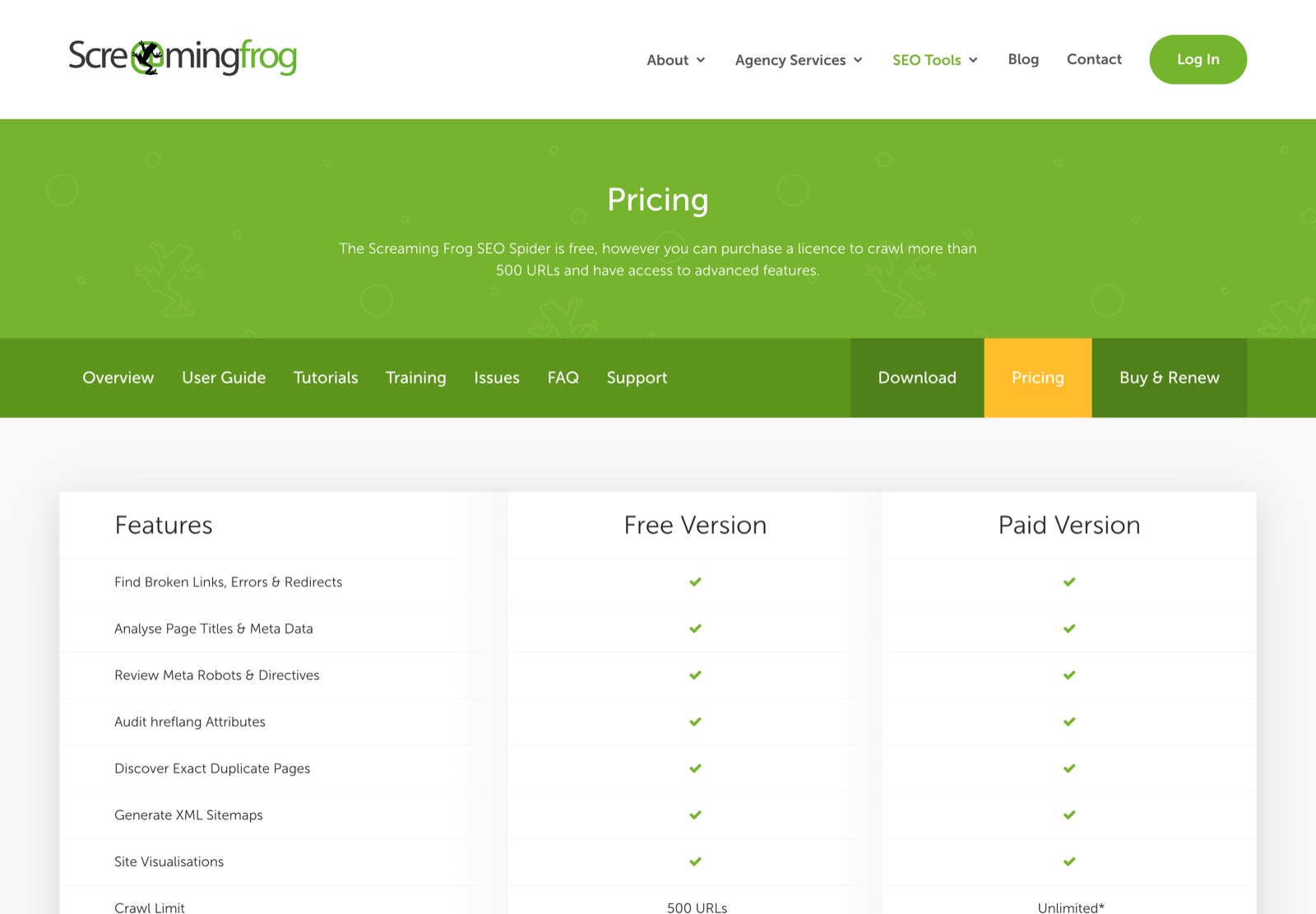
Scale
How big a site each one can finish
On documented ceilings: Screaming Frog unlimited*, LibreCrawl unlimited, Deepcrawl not stated.
Screaming Frog's paid limit is unlimited in principle but bounded by the memory and disk on your machine; it uses a hybrid storage engine that writes to disk for large crawls. LibreCrawl documents 1M+ URL crawls as stable, using real-time memory profiling and virtual scrolling, and its crawler depth setting goes to 5 million. Deepcrawl publishes no URL ceiling — it is an extraction API rather than a whole-site auditor, and asynchronous durable crawling is still listed as coming soon.
No clear edge: the ceilings are stated differently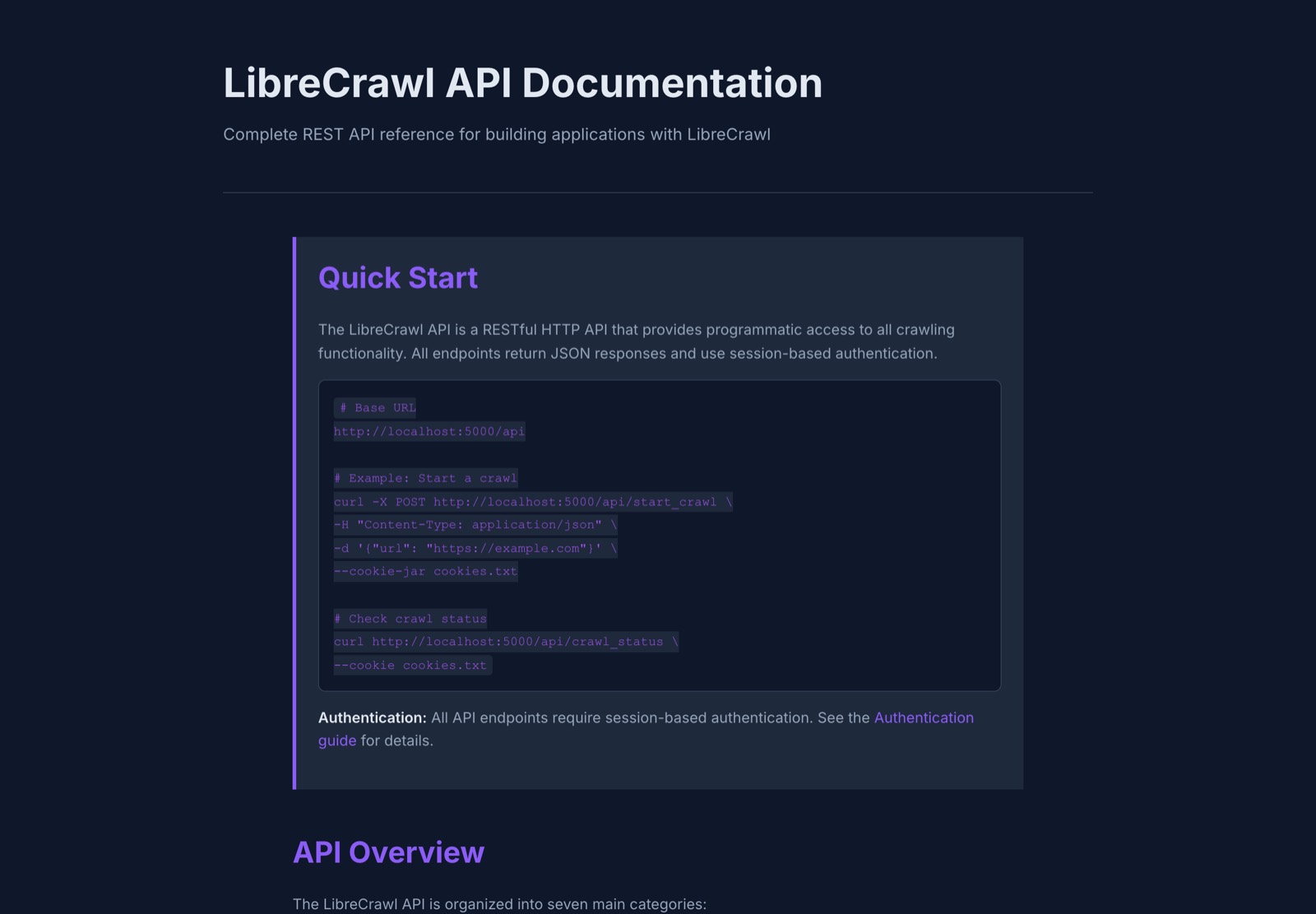
Control
Who owns the tool and where the data sits
LibreCrawl and Deepcrawl are open source and self-hosted, so the crawl data never leaves infrastructure you control and you can read or change the code.
Screaming Frog is proprietary. Screaming Frog runs entirely on your desktop, so the data stays local even though the code is closed. The trade with LibreCrawl and Deepcrawl is support: neither offers a vendor support channel, so problems go to GitHub rather than a helpdesk.
Edge: depends on whether you want to own it or be supported
Pricing
What each plan actually costs
List prices as published by each tool. Screaming Frog and Sitebulb both quote in several currencies; the USD figures below come from their own currency switchers.
Screaming Frog - 500 URL crawl limit
- No sign-up or email capture
- No saving crawls, JavaScript rendering, custom extraction or API integrations
- £199/yr in GBP, per licence per user
- Unlimited crawl limit, bounded by memory and storage
- Full configuration, scheduling and all integrations
- Licence lasts 1 year, then renews
- £189 per licence per year
- £179 per licence per year
- £169 per licence per year
- Sold separately from the SEO Spider
- Free to 1,000 log events and 1 project
LibreCrawl - MIT licence, full source on GitHub
- Unlimited URLs and unlimited exports
- Self-hosted via Docker or Python 3.8+
- No paid tier and no paywalled features
- Guest: 3 crawls per 24 hours, IP-tracked
- User: unlimited crawls, settings and export
- Extra: JavaScript rendering, custom filters, custom CSS
- Admin: concurrency, memory limits, proxy configuration
- Every user gets admin tier
- No rate limits or tier restrictions
Deepcrawl - 100% free with no pricing, per its own site
- Fully open source, self-hostable
- Deploy the dashboard to Vercel and workers to Cloudflare
- npm i deepcrawl, or npm create deepcrawl to self-host
Prices verified 16 August 2026. See vendor sites for current pricing.
Decision guide
Who should choose which
Choose Screaming Frog if…
- You want the tool most SEO documentation and tutorials assume
- Custom extraction and custom JavaScript during a crawl are part of your workflow
- You need AI prompts against crawled pages via OpenAI, Gemini, Ollama or Anthropic
- Link metrics from Majestic, Ahrefs or Moz should flow into the crawl
Choose LibreCrawl if…
- Tool budget is the constraint and you can run Docker or Python
- Data governance means crawl data has to stay on your own servers
- You want to script against a crawler or extend it with your own tabs
- Several people need to crawl at once from one shared install
Choose Deepcrawl if…
- You are feeding page content to an LLM rather than auditing a site
- You want a Firecrawl alternative you can fork and deploy yourself
- A typed SDK inside an agent framework matters more than a UI
- You need a link tree of a domain before an agent browses it
LibreCrawl and Deepcrawl cost nothing, but ask you to host and maintain them. Screaming Frog charges per seat per year and hands you support, reporting and integrations in return. The deciding question is not the price — it is what you are auditing, and who keeps the tool running when a crawl fails.
From the AngleOut team
The crawler is the easy part
A crawler hands you a list of issues. It will not tell you which of them are costing you rankings, or what to fix first given your traffic. If you want that turned into a prioritised plan, we can put one together.







FAQ
Frequently asked questions
Which of Screaming Frog, LibreCrawl and Deepcrawl is free?
LibreCrawl is entirely free under an MIT licence, with no paid tier. Deepcrawl describes itself as 100% free with no pricing, and fully open source. Screaming Frog ships a free version that crawls 500 URLs with no sign-up, but holds back saving crawls, JavaScript rendering, custom extraction and the API integrations for paid licences.
Which one handles the biggest sites?
Screaming Frog unlimited*, LibreCrawl unlimited, Deepcrawl not stated. The unlimited figures are honest but conditional: both are bounded in practice by the memory and disk of the machine doing the crawling.
Do they all render JavaScript?
Screaming Frog renders with an integrated Chromium WRS, but only on a paid licence. LibreCrawl uses Playwright and supports both headless and headed modes. Deepcrawl does not render JavaScript today — its site lists headless browser rendering as coming soon, so anything injected client-side will be missed.
Can a team share one crawl?
Screaming Frog is a single desktop instance per licence, and licences are per user, so sharing means exporting. LibreCrawl supports several concurrent users on one install, but each session is isolated with its own crawler and data. Deepcrawl has a dashboard with API key management, but documents no shared-crawl collaboration.
Which integrates with Google Search Console and Analytics?
Screaming Frog connects to the Search Analytics and URL Inspection APIs plus Google Analytics and PageSpeed Insights, and pulls link metrics from Majestic, Ahrefs and Moz. LibreCrawl integrates PageSpeed Insights with your own Google API key, but documents no Search Console or Analytics connection. Deepcrawl documents no Google integrations — it is an extraction API, not a reporting tool.
What happens when something breaks?
Screaming Frog offers free technical support on both the free and paid versions. LibreCrawl and Deepcrawl have no vendor support channel — you raise issues on GitHub and wait for a maintainer, or fix it yourself. Deepcrawl's own docs carry an active-development warning and say the APIs may change.