The best SEO copywriter examples are not the prettiest pages on the web. They are pages where a writer changed a title, a headline or a section and could point to the result: more clicks, more traffic or more signups.
SEO copywriting is writing that ranks for the terms buyers search and then persuades those buyers to act. The ranking part brings people to the page. The copywriting part decides whether they stay, trust you and click your call to action. Most guides explain the theory. This one shows 12 real pages and tests, what the copywriter did in each one, and how to apply the same move to your own pages.
We grouped the examples by the part of the page they improve: the search result, the page content, the conversion copy and the homepage message.
SEO copywriter examples at a glance
| # | Example | Copy element | What the copywriter did | Result |
|---|---|---|---|---|
| 1 | Backlinko blog post | Title tag | Added curiosity and emotion to the title while keeping the keyword | 45.52% more organic traffic in about a week |
| 2 | Backlinko TrustRank post | Title tag | Used the exact phrase readers typed in SEO forums | First-page ranking for that phrase |
| 3 | Zendesk | Title tag and landing page headline | Sold the benefit in search and repeated it on the page | A strong result for “help desk software” at the time |
| 4 | Wall Street Oasis | Page structure | Longer content, H2 and H3 subheads, new titles and video | 32% more organic traffic |
| 5 | Wirecutter | Secondary keywords | Covered every subtopic buyers search for | About 63% of the page’s traffic came from secondary keywords |
| 6 | BuildZoom | Visual content | Added relevant local project photos to pages | 150% more time on page |
| 7 | Highrise | Signup headline | Led with the free trial and a 60-second signup | 30% more signup clicks |
| 8 | California Closets | Landing page headline | Matched the headline to the ad copy word for word | 115% more lead form submissions |
| 9 | Robbie Richards | In-content CTAs | Added CTAs at the top and middle of high-traffic posts | A waitlist of 600+ people and close to 50 sales |
| 10 | Zapier and CoSchedule | B2B blog content | Wrote for buyers at the evaluation stage | Replaced $20,000+ a year in paid search; 3% reader-to-subscriber rate |
| 11 | Zoho | Homepage headline | Paired an emotional tagline with plain facts | One hero section that answers who, what and why |
| 12 | Razorpay | Homepage headlines | Reused one headline frame across every product | A positioning line customers remember |
Search result copy: examples that win the click
Your title tag and meta description are the first copy a searcher reads. A ranking only turns into traffic if this copy earns the click.
1. Backlinko: a title test that lifted traffic by 45%
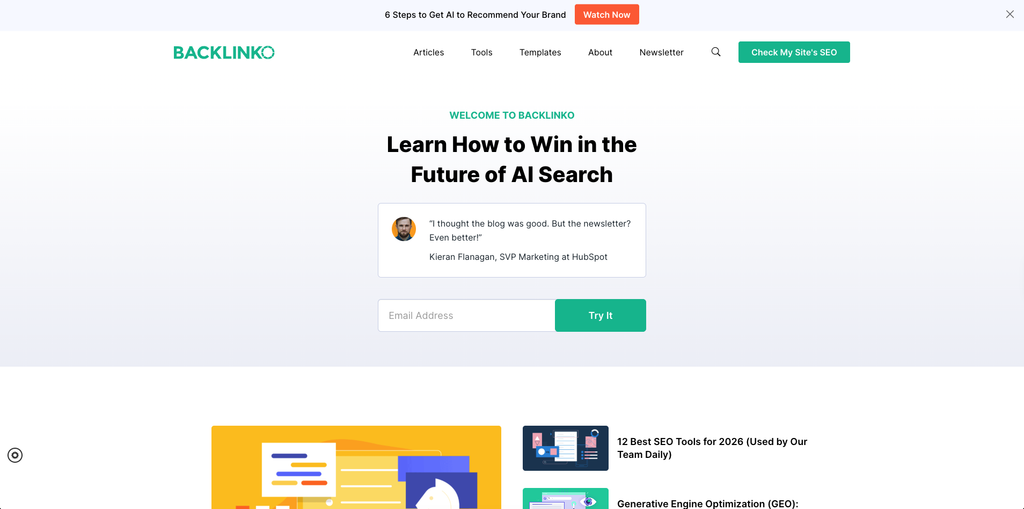
Page type: blog post targeting “SEO campaign”
Brian Dean of Backlinko tested two titles for the same post. The new version kept the target keyword but added an emotional trigger and a curiosity gap. According to Robbie Richards, who documented the test, organic traffic to the post rose by 45.52% within about seven days.
The keyword stayed the same, so the gain came from a more compelling promise. A title that makes people want to click can earn more traffic from the same position.
How to apply it: pick a page that ranks on page one but has a low click-through rate in Google Search Console. Rewrite the title so it keeps the keyword near the front and adds one clear reason to click, such as a number, a result or a promise.
2. Backlinko: borrowing the reader’s own words
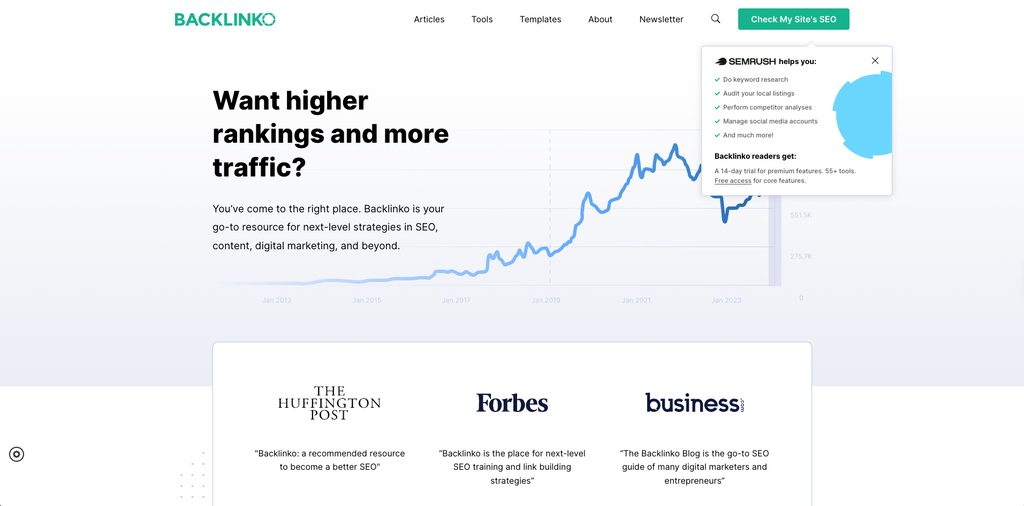
Page type: blog post about Google TrustRank
While researching a post on TrustRank, Brian Dean noticed that people in SEO forums kept asking the same frustrated question: why does Google hate my site? He worked that exact phrase into the title tag. The post ranked on the first page for the phrase and spoke directly to the pain his readers already felt.
This is language mirroring. Keyword tools show you what people search. Forums, Reddit threads, sales calls and review sites show you how they describe the problem in their own words.
How to apply it: before you write, read 10 to 20 real customer questions on Reddit, Quora or your support inbox. Copy the phrases they repeat, and use the strongest one in your title, H1 or first paragraph.
3. Zendesk: selling the benefit in search, then on the page
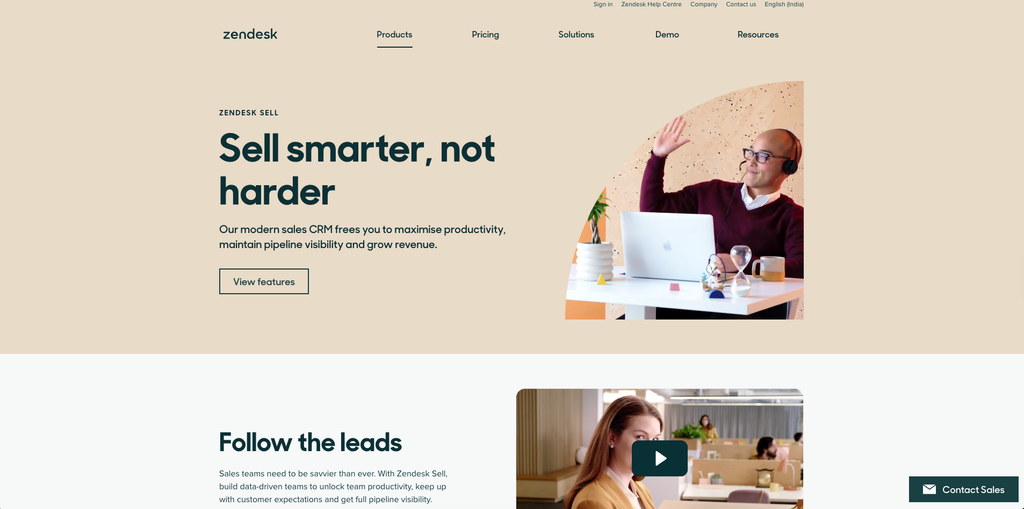
Page type: product page targeting “help desk software”
Zendesk’s search result for “help desk software” used the title “Beautifully Simple Help Desk Software”. It hit the keyword and attacked a common objection at the same time: that help desk tools are ugly and hard to use. The landing page headline then promised the benefit buyers actually wanted, which was a better customer experience.
The search result and the page made the same promise in two different ways. The title spoke to someone comparing tools, and the headline spoke to someone who had already clicked.
How to apply it: list the biggest objection buyers have about your category. Answer it in your title tag, then lead your page headline with the outcome the buyer wants, not the feature you sell.
On-page content: examples that rank and hold attention
Once someone clicks, the page has to prove they are in the right place. These examples show how structure, keyword coverage and visuals keep readers on the page.
4. Wall Street Oasis: a 32% traffic lift from four on-page changes
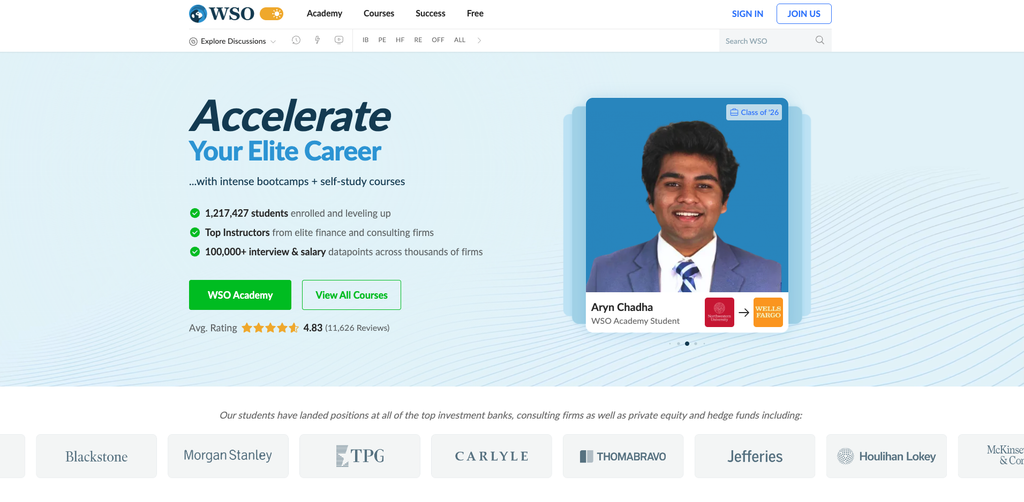
Page type: career and finance content pages
In a 2018 case study published on the Moz blog, the finance community Wall Street Oasis shared how four on-page changes broke a long traffic plateau. The team made its content longer and organized it with clear H2 and H3 subheads. It also rewrote titles to match higher-volume keywords and added relevant videos to the pages. Across the pages it updated, organic traffic grew by 32%.
None of these changes needed new pages or new backlinks. They made existing pages easier to scan, easier for Google to understand and more useful to read.
How to apply it: pull your top 20 pages by impressions from Google Search Console. For each one, check that the title targets the keyword with the most demand, that every section has a descriptive subhead and that at least one visual explains the topic.
5. Wirecutter: covering every subtopic buyers search
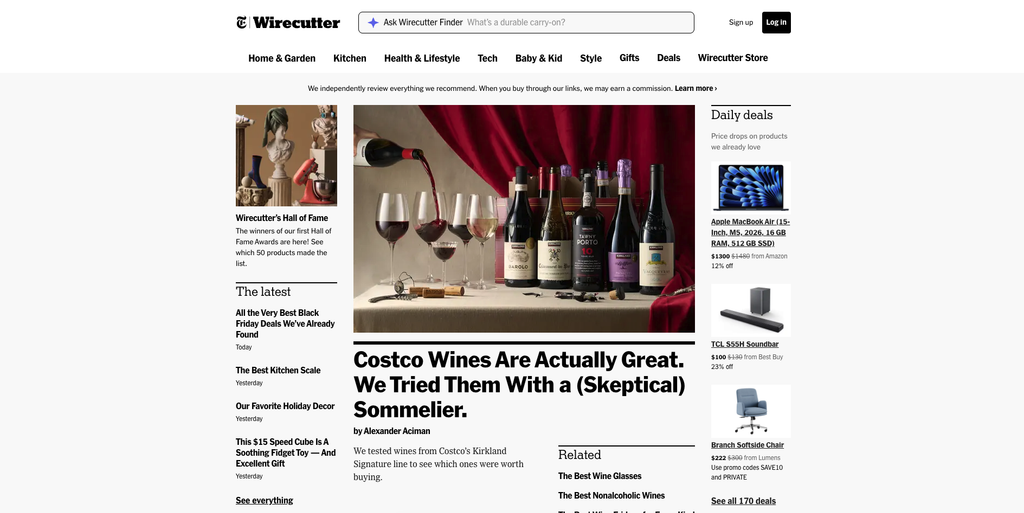
Page type: product review page targeting “best vacuum cleaner”
When Robbie Richards analyzed Wirecutter’s vacuum cleaner review in early 2019, Semrush showed the page ranking for about 4,600 keywords. The main keyword sent around 15,557 visits a month out of roughly 41,800 in total. That means about 63% of the page’s search traffic came from secondary keywords, not the main one.
Each secondary keyword is a related question a buyer typed into Google. A page that answers those questions in depth can rank for all of them, not just the head term.
How to apply it: enter a top-ranking competitor URL into Semrush or Ahrefs and export the keywords it ranks for. Group them into subtopics, and give each important subtopic its own section and subhead on your page.
6. BuildZoom: using visuals to keep people reading
Page type: contractor profile and project pages
BuildZoom, a marketplace for contractors, first replaced blank profile images with relevant building photos. That alone raised time on page by about 10%. The team then added a widget that showed real remodeling projects in the visitor’s area, and time on page rose by 150%, according to a case study shared on Moz by Jiyan Wei.
The copy did not change. What changed was how quickly a visitor could see proof that the page was relevant to them.
How to apply it: add one visual per major section that shows the reader something words cannot, such as a screenshot, a before-and-after example, a chart or a local photo.
Conversion copy: examples that turn readers into leads
Traffic only matters if some of it acts. These examples show how a headline, a matched message or a well-placed call to action (CTA) changes what readers do next.
7. Highrise: a headline that removed the risk
Page type: SaaS signup page
See what Reddit & SEO can do for your pipeline — grab a time
A 30-minute working session. We'll map your top intent gaps and where the pipeline is leaking. No pitch deck.
In 2009, Jason Fried shared a headline test on the Highrise signup page. The original headline simply asked visitors to start an account. The winning version led with the 30-day free trial, and its subhead said signup took less than 60 seconds. Over 4,000 page views, it drove 30% more signup clicks than the original.
The winner answered the two silent questions every visitor had: what will this cost me, and how long will it take?
How to apply it: rewrite your main headline around the biggest risk or effort a buyer worries about. Then use the subhead to show how small that risk or effort really is.
8. California Closets: matching the headline to the promise
Page type: paid search landing page
California Closets tested two landing page versions. One used general catch-all copy. The other matched its headline and subhead word for word to the ad that brought the visitor there. The matched version increased lead form submissions by 115%.
This test used paid ads, but the lesson is the same for organic search. Your title tag and meta description make a promise. When the H1 and first lines keep that promise, visitors know they are in the right place and stay.
How to apply it: compare the title tag of each key page with its H1 and opening paragraph. If they promise different things, rewrite the H1 so it echoes the words that won the click.
9. Robbie Richards: CTAs placed where intent peaks
Page type: high-traffic SEO blog posts
When Robbie Richards prepared to launch his SEO course in 2018, he added personalized CTAs near the top and middle of his most popular posts, not only at the end. The change took him about 30 minutes. Without any ad spend, it built a waitlist of more than 600 people in a few months and led to close to 50 sales.
Many readers never reach the bottom of a long post. A CTA that appears right after a useful section catches people while the value is fresh.
How to apply it: add one in-content CTA after your introduction and another after the most useful section of each high-traffic post. Make each offer relevant to the topic of that post.
B2B and homepage copy: examples that position the brand
The last three examples move from tactics to positioning. They show how SEO copy can reach buyers who are ready to decide, and how a homepage can say what you do in one glance.
10. Zapier and CoSchedule: content written for buyers, not browsers
Page type: B2B SaaS blog content
Freelance SEO copywriter Nathan Ojaokomo says one article he wrote for Zapier displaced more than $20,000 a year in paid search spend. A separate piece he wrote for CoSchedule turned 3% of its readers into subscribers. He credits structure, not a clever button: the piece was built so a reader who found it useful was ready for the next step when it appeared.
His wider lesson is that bottom-of-funnel pages, such as comparison, alternatives and integration pages, reach buyers who are already evaluating tools. These pages work best when they take a clear position early and stay honest about each option’s weaknesses.
How to apply it: list the comparison and alternatives searches buyers make in your category. Write those pages first, give a clear recommendation near the top, and place a CTA right after your most persuasive section.
11. Zoho: an emotional headline backed by plain facts
Page type: homepage
Zoho’s homepage headline reads “Your life’s work, powered by our life’s work.” On its own, that line is all emotion. The subhead then does the practical work. It calls Zoho a software suite, says it is designed for businesses of all sizes and adds that Zoho values your privacy.
In two lines, a first-time visitor learns what Zoho is, who it is for and why it is different. That is exactly what a homepage needs to do for both readers and search engines.
How to apply it: test your homepage hero with a stranger. If they cannot say what you sell, who it is for and why you are different within five seconds, add those facts to the subhead.
12. Razorpay: one headline frame for every product
Page type: homepage and product sections
Razorpay has used a single headline frame across its product lines. Each product gets its own benefit, such as advanced payment solutions, seamless payouts or effortless banking, followed by the same ending: “for India’s finest disruptors.” A short line of three features sits under each headline.
The repeated ending builds one memorable position across many products. The changing first half tells each visitor exactly which product they are looking at.
How to apply it: if you sell several products or services, write one positioning phrase that fits all of them. Then pair it with a specific benefit for each page, so every page is clear on its own and the brand still sounds like one company.
What great SEO copywriting examples have in common
Every example above follows the same rule: the copy serves the searcher first, and the keyword is how the searcher finds it. Use this checklist to review any page against the same standard.
| Element | What good looks like | Example to study |
|---|---|---|
| Search intent | The page format matches what already ranks, and the opening answers the query right away | Wirecutter, Nathan Ojaokomo’s BOFU pages |
| Title tag | Keyword near the front, plus one clear reason to click | Backlinko title test |
| Customer language | Uses the phrases buyers actually type and say | Backlinko “Google hates my site” |
| Message match | The H1 and first lines keep the promise made in the search result | California Closets, Zendesk |
| Structure | Descriptive H2 and H3 subheads, short paragraphs and scannable sections | Wall Street Oasis |
| Keyword coverage | Sections for the related questions buyers search, not just the head term | Wirecutter |
| Proof and visuals | Numbers, screenshots, photos or video that show instead of tell | BuildZoom |
| Headline | Leads with the outcome and removes the biggest risk or effort | Highrise, Zoho |
| Calls to action | Placed where interest peaks, not only at the end | Robbie Richards |
| Positioning | One memorable idea that stays consistent across pages | Razorpay |
How to write SEO copy like these examples
You can use the same process on any page, whether it is a blog post, a product page or a homepage. Follow these eight steps in order, because each one builds on the last.
- Confirm the search intent. Google your target keyword and study the top five organic results. If they are all listicles, a product page will not rank, so match the format that already wins.
- Choose your primary and secondary keywords. Pick one primary keyword with clear intent. Then pull the secondary keywords that top-ranking pages also rank for, and plan a section for each important one.
- Collect your customer’s language. Read Reddit threads, forum posts, reviews and sales call notes. Note the exact phrases people use to describe the problem.
- Write the title tag and meta description first. Put the keyword near the front of the title and give one clear reason to click. Make sure the meta description describes what the page truly delivers.
- Lead with the answer. Open with the most important point and keep your H1 consistent with the promise in your title. Readers decide in seconds whether to stay.
- Use subheads that tell the story. Someone who reads only your H2s should understand the whole page. Keep paragraphs to two or three sentences.
- Add proof. Support claims with numbers, screenshots, examples, expert quotes or original data. Link to at least three authoritative sources.
- Place your CTAs where interest peaks. Add a CTA after the introduction or the most useful section, and match the offer to what the reader came to do.
After you publish, test one element at a time. Start with the title tag on pages that rank well but get few clicks, because that is often the fastest win.
Frequently asked questions about SEO copywriting
What does an SEO copywriter do?
An SEO copywriter writes pages that rank in search and persuade readers to act. The job covers keyword and intent research, title tags and meta descriptions, page structure, the body copy itself and the calls to action that turn readers into leads or customers.
What is the difference between SEO copywriting and content writing?
Content writing usually aims to inform or educate. SEO copywriting adds two goals: ranking for a chosen keyword and moving the reader toward an action. In practice, the best SEO copy does all three.
Where can I find good SEO copywriting examples to study?
Start with your own search results. Google the commercial keywords in your category and study the top-ranking pages. Look at how they match intent, how they structure the page and where they place calls to action. Then look for the gaps you could fill.
How long should SEO copy be?
As long as it takes to fully answer the searcher’s question, and no longer. A product page may need a few hundred words, while a competitive guide may need several thousand. Check the length of the pages that already rank, then aim to be more useful, not just longer.
Does SEO copywriting still matter with AI search?
Yes. AI answers in Google and chatbots still draw on web pages, and clear, specific, well-structured pages are easier for them to understand and cite. The same habits that help a reader, such as direct answers, descriptive subheads and real data, also make your page easier for AI systems to use.
Final takeaway
The best SEO copywriter examples share one habit: they make a clear promise in search and keep it on the page. Backlinko won clicks with a sharper title. Wall Street Oasis and Wirecutter earned traffic with better structure and coverage. Highrise and California Closets turned visitors into leads by matching their headlines to what people wanted.
You do not need to apply all 12 ideas at once. Pick the page that matters most to your business, run it through the checklist above and fix the weakest element first.
Want SEO copy that ranks and converts? Angleout writes and optimizes B2B SaaS pages, from blog posts to comparison and product pages, so they reach buyers and give them a reason to act. Talk to our team to see where your pages are leaving traffic and leads on the table.
47 checkpoints across technical, content, and conversion — the same list our strategists run on every new account.
Sources
- Robbie Richards: 15 SEO copywriting techniques with examples and A/B tests
- Nathan Ojaokomo: SEO copywriting examples that rank
- ZeroAdo: SEO copywriting examples
- Signal v. Noise: headline tests on the Highrise signup page
- Behave (WhichTestWon): California Closets landing page test
- Zoho homepage
- Razorpay homepage